I know everyone is tired of coronavirus and all the restrictions its placed on our lives. And I know everyone is getting excited about those restrictions being lessened at last. But I have an important message for my little corner of the world (patients, family, and friends): It’s Anti-Nike time.
JUST DON’T DO IT!
Just because restaurants are opening back up for indoor dining, DON’T DO IT! Just because gatherings are now sanctioned, DON’T DO IT! Movies, museums, concerts, communal worship, all kinds of normal activities we’ve dearly missed over the last six months are now opening back up again. Please, JUST DON’T DO IT!
The pandemic is not over. As people gather again, transmission will pick up and people will begin getting sick again. And despite our (very) slightly increased ability to provide supportive care for those who get sick, people will die. Probably a lot of them. Possibly more than have already died. And I don’t want that total to include the people I care about.
I know you’ve been wearing a mask (at least I hope so.) I know you’ve been limiting your contacts with other people (I really hope so!) And I know you’re going nuts, and your mental health is tanking, and so on. Unfortunately, none of that changes anything. THE VIRUS DOESN’T CARE!! Just think about how much worse your mental health will be when you’re grieving the loss of loved ones, and how much worse theirs will be grieving for you!
By the way, (some of you): No, this is not a hoax. No, it’s not a deep state attempt to oust Donald Trump, nor a Q-Anon conspiracy to wreck the economy. Yes, it’s exactly as bad as you’ve been reading, and it has the distinct possibility to get a hell of a lot worse.
PLEASE keep acting as if everything were completely locked down (as I suspect it will be again sometime in the next few months.) Keep wearing your mask in public, and stay away from people (the term I prefer to “social distancing”.) This disease is passed by sharing air with people, so “things” like groceries, takeout, and deliveries are not that big a deal, nor are wiping things down, and “temperature checks” with those notoriously inaccurate distance devices.
When in doubt about whether or not you should do something that involves other breathing, talking, shouting, singing human beings, channel your inner Anti-Nike and JUST DON’T DO IT!
It’s Anti-Nike Time
Posted in Medical
My take on the Coronavirus-19 Outbreak
The following represent MY BELIEFS, albeit as a board-certified (and re-certified x 4) family physician with over 30 years experience, about the novel Coronavirus and Covid-19 disease, based upon basic principles of epidemiology and currently available information.
First: I believe that Cov-19 is ALREADY PRESENT in the community. There is currently no way to determine its true prevalance, partially due to inadequate testing, but also because of the nature of the virus (variable disease severity ranging from inapparent infection to fatal disease, and high level of contagion.) What this means is that since anyone could be infected, ALWAYS ASSUME you are potentially in contact with it.
Second: Basic principles like handwashing, covering coughs and sneezes with your elbow, and not touching your face (virually impossible to do, BTW) are important, but in the case, I BELIEVE relative quarantine, also being referred to as “social isolation,” is a good idea. Although officially this only applies to people at increased risk (the very young and very old, immunocompromised individuals, people with risk factors for severe disease like underlying respiratory conditions) I BELIEVE it is a good idea for everyone.
What exactly does that mean?
Risk is roughly proprotional to distance + time. Being very close to an infected individual for a short time is risky, but so is more prolonged exposure even if not as physically close. My random definition of “close” is about three square feet, so avoiding prolonged exposure at that distance should be avoided at least for the rest of the winter, or until authorities give the all-clear.
The phrase “common sense precautions” about contact with others is being thrown around a lot. Here’s a more specific rundown of what that means in this situation, IN MY OPINION:
AVOID:
* Church/religious group worship including choir
* School (if too crowded and at least 3 square foot spacing can’t be maintained
* Theaters, concerts, sporting events, rallies and other group entertainment events
* Meetings, conferences, conventions, and other group professional events
* Social gatherings involving inanimate objects, ie card games, Mah Jong, other board games, etc.
In terms of work: think about your setting. If you spend most of your time at work alone in a cubicle, you’re probably okay to go in. If you go a lot of meetings, telework is probably smarter.
Health care providers are obviously a special case. We need to stay away from patients IF WE FEEL EVEN THE SLIGHTEST BIT UNWELL. And/or follow the policies of your employer (I don’t happen to have one) which are generally aimed at protecting both workers and patients.
SITUATIONS THAT ARE PROBABLY OKAY:
* Grocery and other shopping (Don’t just hang out at the mall, though)
* Solo/small outdoor group activities
* Visiting with friends and neighbors, ASSUMING EVERYONE IS FEELING WELL
You may have noticed a recurring theme: IF YOU FEEL SICK, STAY HOME. Even if you don’t have any known coronavirus exposure, YOU COULD STILL HAVE IT. (AGAIN: My opinion only, but an informed one.)
When to seek medical attention? The same as for any other condition, like a cold, flu, bronchitis, etc: fever, chills, cough, trouble breathing. When NOT to seek medical attention (aka When not to bother the doctor or tie up ER resources): same as any other condition. Slight fever, mild aches, breathing okay. And so on. As of this writing (3/7/20) Covid-19 testing IS COMMERCIALLY AVAILABLE WITH A DOCTOR’S ORDER. I can collect the specimen in my office and send it off, just like any other lab test. BE AWARE that the specimen involved is a nasal swab: I stick a wire Q-tip all the way into the back of your nose (both sides!), which is just as little fun as it sounds. But adequate specimen collection is crucial to accurate results, so be aware that if the guy at urgent care just tickles the inside of your nose for a second, that negative result may not be all that reassuring.
How bad is this going to be? I’m not sure, but I BELIEVE it has the potential to be very bad indeed. Recent reports from China (that the numbers aren’t as bad as originally reported) are suspect, IN MY OPINION. Go back and google statistics from the 2009 H1N1 outbreak: things were very bad then, so we’ve actually been through stuff like this before.
A word about the phrase, “Don’t panic.” It’s inappropriate and sometimes counterproductive to tell people what to feel (or not feel.) Emotional reactions are what they are; issues only arise when people act on those emotions in ways that are inappropriate or counterproductive. I prefer the phrasing: “There is no reason for panic at this time.” (Technically there’s never a reason to panic, as panic precludes necessary actions and responses to crisis situations.)
How long will it go on? I don’t know, but clearly not forever. Life will eventually return to normal, and we can go back to LOLing about cute cat pix (with which I am very well stocked.)
Hope that helps.
Posted in Medical
The Calm Before Tomorrow
Background: DinoDaughter gave me a book for the holidays called Just Write One Thing Today containing 365 writing prompts. The post title above is Prompt #93, and it’s my reflections on a song written by that same daughter. The lyrics of the song are below, with my musings indented.
Musings on
A Late Night Lullaby
by Joanna Hulse
When the night comes, and the moon glows white;
The sun is long gone and the night is well underway. The clock is ticking, and I have to get to sleep. Why do I lie here staring at the ceiling? Is it the light of the full moon keeping me awake?
Be at peace now, things will be alright.
But will they? My mind is racing, going over and over all the ways things can go wrong, and I can’t stop it. Can’t even start to slow it down.
When the stars shine, look above and feel quiet stillness, for our souls to heal.
I get up, leave the bedroom, and wander the house aimlessly. Finally I open the patio door and step out into the mild night. I look up and there they are: the stars, shining gently. They’ve been there longer than I’ve drawn breath, and will remain long after I’m dust. I do feel my soul slowing down in the face of their eternity.
Let the darkness ease your troubles; let the night remove your cares. Find the calm that you deserve, and the answer to your prayers.
Somehow the empty darkness surrounds me and gently teases away my tension. My stomach un-knots as I feel the calm night descend upon me, draping over my heart like a baby blanket. I whisper a wordless prayer into the ether, and swear I can feel its comforting echo return on the light breeze.
Lay down, sleep well; soon enough the day will break. May you find serenity, and love be with you when you wake.
Amen.
Posted in Family/Personal
The Rules Have Not Changed
In the wake of the recent flood of allegations of sexual harrasment against so many men in so many different positions of power, the refrain has begun, “The rules have changed.” Frivolous concerns about office holiday parties threaten to trivialize the remarkable transformation of women finally being believed, and men finally beginning to be held accountable for their actions.
The rules have not changed. What has changed is that, at long last, there are now real consequences for breaking the rules. Jobs lost, reputations shredded; punishment for the perpetrators instead of the victims for a change. We haven’t yet gotten around to actual reparations, but the emerging default stance of “believing the women” is at least a baby step in the right direction.
The rules have not changed.
It was never appropriate to solicit sex in the workplace. Bullying was never acceptable behavior. The abuse of power was, is, and always will be despicable. The only difference is that for too long, nothing happened to the perpetrators when the rules were broken. There was no punishment for misbehavior.
Now there is. At least for the moment. Just ask the women who brought down Robert Packwood in 1995. They thought they got something started. Oops. What’s another twenty years or so? Then again, with the Internet and social media, maybe this time really will be different. We can only hope.
As for the good men out there (who I choose to believe constitute the majority) you have nothing to worry about. Continue treating everyone in your workplace with respect, refrain from sexualizing professional encounters, don’t abuse your power with bullying behaviors, and you’ll be fine. As for those of you who may have skirted the line in the past, consider coming clean now, with real apologies, and cut it out going forward. But quit complaining that “the rules have changed.” They have not.
Posted in Politics
Not Me; But Standing with #MeToo
There’s been a recent social media campaign in the wake of the dreadful revelations about ongoing long term sexual harassment and abuse specifically by media mogul Harvey Weinstein. Posting the hashtag #metoo on Facebook and other social media sites is supposed to call attention to the ubiquity of the problem by showing how many women have experienced this outrageous behavior, and how it’s affected their lives.
As a rule, I tend not to participate in these kinds of things, mainly because I’m not on Facebook or any social media all that much. But in this case, it is also because this is not something I have experienced.
I know that I am insanely privileged: born with white skin into affluence and safety, raised by secure, supportive parents and grandparents (my grandmother told us we should always live with a man before marrying him; this was in the 1960s), afforded summers and high school in a girls only environment, and a historically female medical school.
I take no credit for any of this. I am well aware that another word for Privilege is “Luck.” There is nothing intrinsically better about me, stronger, smarter, nothing other than the grace of Gd that has allowed me to live my life to date without ever having experienced sexual assault or harassment.
Possibly some may say that I am wrong; that I have experienced sexism like this, but either do not recall or am repressing the experience. While I suppose that is technically possible, I have no psychic repercussions. I feel strong and confident, while striving to be appropriately cautious. I suppose resilience is another form of privilege.
I have frequently seen the assertion that “every” woman has been in one of these situations at some point. I submit that this assertion invalidates my voice and my experience. Even if I am the only woman in the world who have never been assaulted or harassed, it in no way diminishes the horror of the experience of everyone else. Even if one woman has ever been treated this way, it is too many. As a particularly perceptive young lady of my aquaintance puts it:
“…why do any of us have to post anything. I’m internally conflicted: we should neither need a Facebook campaign to see that this is a issue nor should this even be an issue at all. So yeah me too, but I’m angry about posting this! I want the world to hear us and to understand how sexual harassment and assault effects all of us, and also often most hurts those society has already worked hard to hurt. But if we need Facebook to tell us this, that’s fucking sad.”
(h/t APS)
I do not minimize the problem. I do not blame the victims. I do not claim you are overreacting, or asked for it, or that the perpetrators are anything other than deplorable, fully responsible for their actions. I merely point out that it is something I have not experienced.
Although I cannot post #MeToo, I stand with all who do.
Posted in Family/Personal, Politics
Medical Marijuana is a Scam, with which I Want No Part
People keep asking me what I think about Medical Marijana. Does it really work? Am I willing to prescribe it?
Here’s what I think:
Given that there is no reliable medical evidence of efficacy for marijuana for any condition at this time, I’m gonna say no, it doesn’t work.
Do people who smoke or otherwise consume it feel better? Sure. Getting high feels good, at least to most people. That’s why it’s called “getting high.” But so does a massage or getting your hair done, or eating fresh bread (or baking it.) Or sipping a fine wine, or eating chocolate, or watching a magnificent sunset. The problem is that not everything that makes you feel better, even if you’re suffering from a chronic illness, ought to be classified as a medical treatment.
Do I think marijuana ought to be legalized? ABSOLUTELY! Legalize, regulate, and tax the stuff. Leave it to me to try discouraging folks from sucking incendiary particulate matter into their lungs, but quit locking people up (mainly people of color, I may add) for smoking, growing, or selling it. But don’t try an end run around logic by calling it “medical.”
Some might ask me to think of this as analogous to the Prohibition-era “prescription” of a nightcap for “medicinal purposes.” Except that back then there weren’t insurance companies and Pharmacy Benefit Managers micromanaging my prescription pad, demanding prior authorization, only granted for specific diagnoses, complete with appropriate documentation. Even if I might be inclined to fudge a diagnosis, those charting requirements would push my integrity past where I’m willing to let it go.
That’s why I’m not willing to “prescribe” medical marijuana.
If only more docs were willing to take a similar stand for science.
(Apologies for not posting this on April 20th.)
Posted in Medical
Urgent Care Follies
What is it with antibiotics and steroids for upper respiratory infections at Urgent Care these days?
Over-prescribing of antibiotics has been a problem ever since the recognition that uncomplicated upper respiratory infections were almost always viral and would resolve on their own. I like to call the Z-pak (a pre-packaged 5-day course of azithromycin, a macrolide antibiotic) a “Placebo Antibiotic.” It doesn’t help a viral infection, but has relatively few side effects, and the accomplishment of making the patient feel like he’s gotten something for his handsome $15.00 co-pay. Not optimal treatment by any means, but an option for the violently insistent patient you just can’t fight with anymore.
Prednisone, on the other hand…
Steroids are real medicine; not something to f@ck around with. Even the six-day “dose pack” that doesn’t start high enough and tapers down too quickly to do any good when you really need it can cause significant side effects (elevated blood pressure, blood sugar, trouble sleeping, GI upset, stomach bleeding…) and carries the very real risk of making some kinds of infections worse. (Looking at you, Shingles.) Couple that with the, shall we say, questionable diagnostic acumen I’ve observed in many Urgent Care facilities that deign to send me anything, and I’ve moved through bemused, past concerned, coming up on terrified.
If you have a cold, first of all wait a week. Stay home, rest, and drink fluids. Please.
If it’s been longer than that, call me (or your own doctor.) We can find out over the phone (risk factors for strep, pneumonia, other things we can actually do something about) if it’s worth your time to come in or not.
If you absolutely, positively, must go to Urgent Care, please don’t take the antibiotics and the steroids. They are not going to help, and they could very well hurt you. Just because something is “prescribed” does NOT mean it’s a good idea to take.
And if you work in Urgent Care, what the f@ckmuffin is going on there? At this point, you really should be able to resist the siren call of antibiotics, with all the supporting literature available. But steroids? What the actual f@ck is going on with that?
Posted in Medical
The Saddest Encounter
I had an upsetting encounter the other day with a 22-year-old woman of color, who mentioned (secondary to the purpose of the visit) that she was pretty sure she had breast cancer.
Why did she think that?
She’d found a lump in her breast.
(Somewhat unusually for the specific setting, she let me do a breast exam. All I felt was a small area of lumpy breast tissue, possibly a fibroadenoma at worst. Of course I would recommend ultrasound and possibly excision, but I wasn’t acting in the capacity of her primary care physician.)
Had she seen a doctor about it?
No.
Why not?
The answer that sent my jaw to the floor:
Cancer means you’re going to die, and the only thing the doctors want to do is give you chemotherapy to make you as miserable as possible for as long as possible, so they can make as much money as they can off you.
No, she was not being sarcastic, or ironic, or anything but sadly sincere. I was taken completely aback.
I pulled my chair around to the other side of the desk, and asked her to give me her hands, which I held tightly while gazing straight into her eyes. As sincerely and seriously as I possibly could, I told her that no, that’s not what doctors did. At least none of the ones I know, and I know a lot of cancer doctors, every last one of whom is a particularly shining example of the best of the warmth, caring, and compassion to be found in the medical profession.
And saddest of all: I don’t think she believed me.
So yes, apparently in this day and age, there is still widespread belief that:
- Cancer is uniformly and universally fatal,
- Doctors inflict suffering for the sole reason of making money, and
- Making money is the only reason doctors treat cancer.
What can one little dinosaur do? Other than hold someone’s hands, gaze deeply into their eyes, and pour my soul into every word, not much else. I can only hope.
Edited to address comments:
Tom F.:
[F]rom what you’ve told us here, you spoke to one person and concluded that what she told you is somehow “widespread belief”. Either provide some more details or brush up on the fallacy of hasty generalization.
Further dialogue:
Me: Why do you think that?
Her: My mom told me. Everyone knows it. And I watch documentaries.
Elle:
I was waiting for an explanation of why her skin color played into the story, but I saw no explanation. Just curious why that detail was added …
Documented issues of distrust between the African American and medical communities here, here, and here. Many more easily googled. Prior to this, I’ve probably been hopelessly naive, making this a sad wake up call.
Posted in Medical
Popping Pus
Warning: graphic descriptions ahead. Continue in temporal and/or physical proximity to food and drink at your own risk.
Everyone has their abscess story. Tales of pressurized pockets of pus abound. Trust me: however far-fetched they may seem…they’re not. I had one such experience last week in which a man came to me with a painful red swollen lump on his back. It was about 2 inches in diameter, angry and fluctuant (softened) and ready to be drained, which he pleaded with me to do. So I did.
Although this is typically one of the more painful procedures I can inflict on someone, he did great. Possibly his status as a chronic pain patient on a fairly hefty baseline narcotic dose helped. Still, I was able to get away with the “I” (incision) part of the I&D (drainage) without even a local. (I’ve been told that the pH of the abscess cavity neutralizes the local anesthetic anyway, so it’s just an extra futile stick with which I was happy to dispense.)
Taking my #11 blade and jabbing it in, I was immediately rewarded with about a teaspoonful of thick bright yellow-greenish pus. Knowing there was plenty more in there, I got to squeezing, keeping plenty of 4×4’s in hand to sop up my gleanings. One particular squeeze resulted in a distinct “squirt” that landed a little pus on the man’s pulled-up shirt, which I surreptitiously wiped away. This is also why I wear glasses, by the way, though luckily I didn’t get anything on them (as I have in the past.) All future squeezings were with a strategically placed 4×4 over the wound.
Once I’d gotten out as much as I could (ie when the drainage was down to just blood), I dressed the wound and helped the patient up.*
As he’s putting his shirt back on and chattering away about his recent cruise (which was when the thing got infected and why it took him so long to come see me about it), I’m throwing away the dirty 4x4s and prescribing his antibiotics. He asks for a refill of another medication, and suddenly I see it!
Behind him, up on the wall about a foot below the ceiling, clings about a four inch ribbon of bloody green pus streaked with blood. It’s a little line of red on an otherwise spotless expanse of white wall, waaaaaaaaaaaay up high. That thing sent a squirt of pus five feet into the air!
All I can think is, “Shut up and get out of here already so I can clean that up before my next patient sees it.” Also, “And for the love of all that is holy, PLEASE don’t turn around. Though if you do turn around, please please please don’t look up.” Then he asks for another refill, and I think, “Yes, yes, yes, OMG you can have anything you want but please just get the fuck out of here!”
Eventually he leaves. Without turning around, thank all the Gods that be.
For those of you who know me, I am short. (I am also short for those who do not know me, but you probably figured that out.) I have a cute little folding step stool that I did NOT fetch. No way was it going to get me high enough. Instead I went into my storage room and found a slightly higher rolling stool, the kind with springs so that when you stand on it, it stops rolling. Thanks be to the heavens above, it worked.
I took some alcohol and a few leftover 4x4s and gingerly dabbed at it. The last thing I wanted to do was leave an enormous red smear instead of just a red-green streak. I also found myself praying that the paint was washable.
Success!
It didn’t even take all that long until my wall was again spotless. And I was left with yet another reminder of the power of pus. Never underestimate an abscess.
*Yes, I know you’re supposed to break up the loculations and pack the wound, then bring the patient back the next day to remove the packing. But frankly this one wasn’t that big, and I have found that most of these patients do fine anyway.
Posted in Medical
The Alt-Right and Alt-Med
I’ve suddenly come to realize that a rising political group, the so-called “Alt-Right” (basically nothing more than “…white supremacists who have repackaged the hate and served it up in a more palatable form for human consumption…“) and much of the “Alt Med” movement (including purveyors and proponents of alternative, complementary, integrative, functional, holistic, and assorted other terms for quackery through the years) have a lot in common.
Both operate in fact-free zones. Reality doesn’t seem to matter to either of them. Immigrants are objectively not streaming across our borders threatening our way of life, and as anyone with a third grade level of science education understands, water does not have memory (homeopathy.) Race is nothing but a sociological construct, so “protecting one’s race” is meaningless. There is also no magical life force other than well-understood neuronal impulses flowing through our spines (chiropractic), no meridians or chi (acupuncture), and so on and so forth.
Both movements have been with us a very long time, in one guise or another. Neo-nazis begat skinheads, begat today’s Breitbart, while Alternative spawned Complementary which morphed into Integrative. Nothing changes the essential truths of white supremacy and quackery, respectively.
Interestingly, though, both are quite media savvy these days, allowing them to spread their unreality (a more tactful word than “lies”) to ever larger number of people. Both are also trying harder than ever to legitimize themselves to the mainstream, with alarming results when they succeed. The problem of course is that facts, along with their correlate “reality,” are irrelevant to ideology. Your belief that vaccines are dangerous won’t stop your kid from dying of measles complications. Funny how that works.
I’m more interested in why people are drawn to movements built on things that are demonstrably, objectively false. In the case of Alt-Med, I’ve already written about it:
(Read the whole post. It’s pretty good, even if it was written way back in 2007.)
I believe the same holds true for the so-called alt-right as well.
There are folks who for whatever reason are not doing as well as they hoped or expected. Maybe it’s their fault, though often not. Yes, there was once a time in this country when a single earner with a high school education could support a family. This is no longer the case, and there are those who find it terribly unfair. Finding someone — anyone — to blame is more cognitively satisfying than doing the hard work of coping with a newly untenable reality. That’s where the so-called alt-right comes in.
Targeting the disaffected, they provide a sense of belonging and power, mainly by providing scapegoats. It’s not your fault you can’t find a job; it’s all those immigrants swarming over the border. (Never mind the inconvenient fact that immigrant jobs like landscaping and agriculture are thankless, backbreaking, and poorly paid.) Can’t get a girl to go out with you? It’s the gays…somehow. Blaming the “other” is so much easier than actually doing something about your own situation.
Coal is not coming back, any more than the horse and buggy, or the thriving ice trade that predated refrigeration technology. Robotics has converted manufacturing into a more cerebral industry requiring highly educated workers to service the robots than high school graduates to do the actual manufacturing.
Cancer can be treated, but not always. People are going to die from it, as well as from heart disease, dementia, and complications of vaccine-preventable infectious diseases. Magic water is not going to help. Neither is spinal manipulation, energy healing, or chakra balancing.
Those are facts, rejected by both Alt-Med and the so-called “alt-right.” However you cut it, reality is a bitch.
Posted in Medical
Positioning for the Future
As you may have heard, the United States has a new president. From where I sit, things do not bode well for me — that is to say my patients — over the next few years. In addition to the virtual certainty of massive changes in health insurance, I fear a significant overall economic downturn similar to the last time a Republican held office. Until the outgoing president managed to turn around the Great Recession, my income tanked. In fact, it’s only now beginning to come back to where it was seven years ago. Talk about nipping it in the bud!
As I say, though, this is more about my patients than about me personally. Just as my practice enjoyed a nice uptick as more people acquired insurance through the ACA, I anticipate that large numbers of patients will now be losing that insurance. So to the about-to-be newly-uninsured, along with everyone kicked off the all-but-certain-to-contract Medicaid, please listen:
Medical care as I am able to provide it is NOT EXPENSIVE. Primary care for minor illness and injury, evaluation of new symptoms, management of chronic conditions, and preventive care is not free, but not break-the-bank expensive either.
I take cash. (Including checks of course, and all credit cards.)
Here’s a price list reflecting my cash discount*:
- Truly brief visit (up to 15 minutes): $50
- Minor illness (up to 30 minutes): $75
- More complicated (up to 45 minutes): $100
- Very complex (more than 45 minutes): $125
- New patients: Add $25 to each of the above
- Tdap shot: $50
- Flu shot: $30
- EKG: $25
- Urinalysis: $10
- Urine pregnancy test: $10
- Strep test: $20
Obviously this isn’t everything, but it covers the most common services I provide. I can’t provide the same kind of 24/7 coverage as Urgent Care, but without insurance, I’m told those places can get expensive.
If you feel you need medical attention, PLEASE don’t hesitate to come see me because of money. Although I do need to keep the lights on, I’m not interested in picking your pocket. I just want to help.
*As of the date of this post. Subject to change.
This is NOT my regular fee schedule for insurance billing, but rather the discount offered for cash payment at time of service.
Posted in Medical
Why We Do It
Medicine is a business. Of course we have bills to pay to keep the lights on and the phones running. No, as a rule, doctors are not starving. But if money were what we were out for, we sure wouldn’t have opted for seven (or more) grueling years of training followed by the 24/7 call of solo private practice. No; we’re in it for our patients. Aside from the still small voice that tells us when we’ve done well, there are those wonderful times when we get to hear our patients say it explicitly.
A recent email:
…I just wanted you to know that both the care and kindness you provided to me throughout my life really did influence me. I have recently completed my residency in veterinary ECC [Emergency and Critical Care] and know that although I occasionally do some “bad ass” things from day to day, I will never have the influence or trust that general practitioners have with their patients (or in vet med-clients). Thinking of what you have provided to me and my mother and even a now ex-boyfriend, offers a perspective as to why when scared clients fall back to their family vets over the emergency docs.
Having finished my residency, I am now attempting to find work-life balance, but it is not easy. I am inspired by your family, practice, and ability to write on top of all of that. Thank you for being a wonderful example. I don’t know if I will see you again [now that I’m living in another state] but wanted to say THANK YOU.
And that’s why we do it.
(shared with permission)
Posted in Medical
A New Doctor
In the sixth long year after college graduation, at long, long last, the NinjaBaker has achieved the pinnacle of academics. And I am no longer the only doctor in the family:
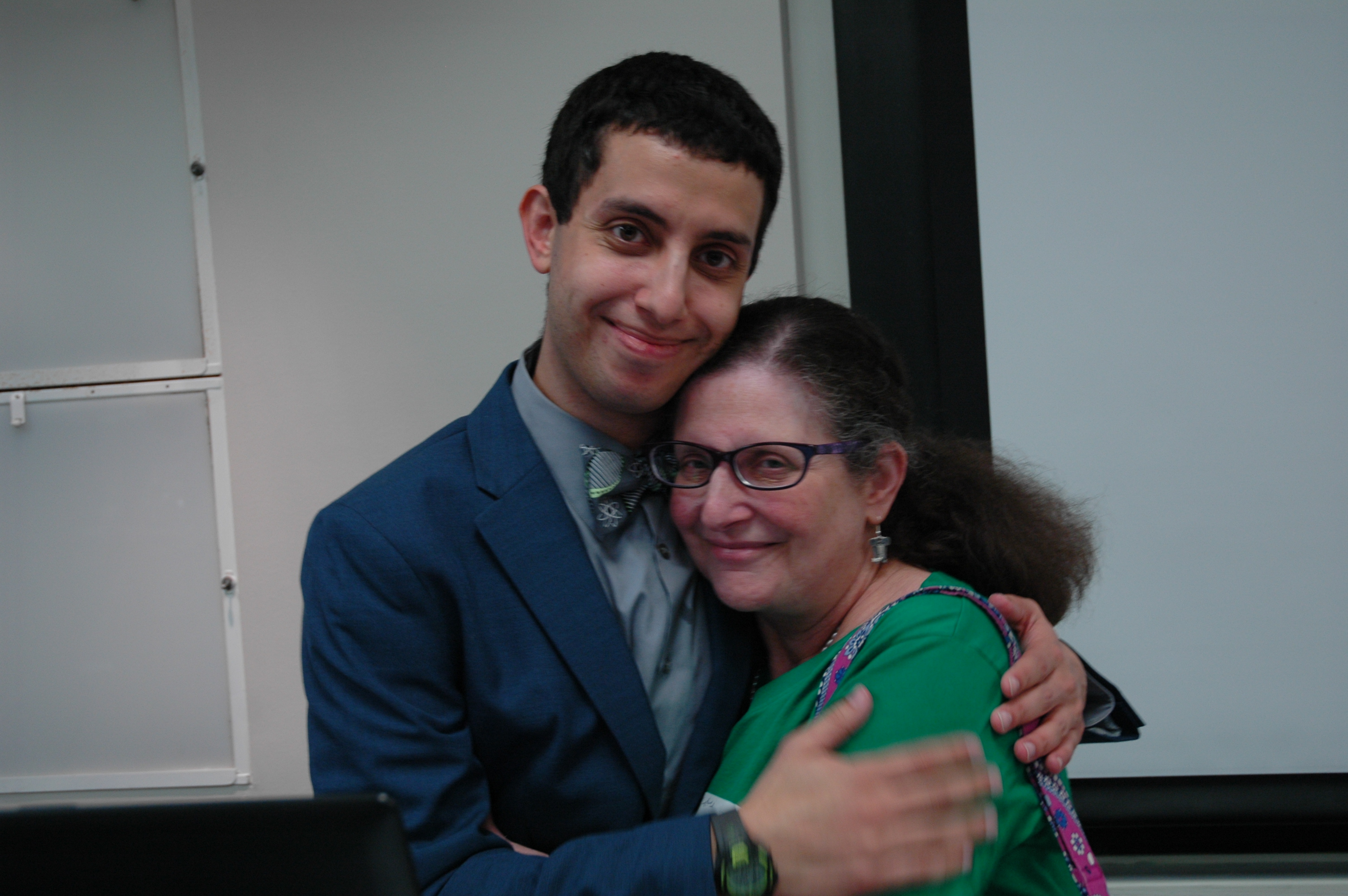
With the awarding of his PhD in Molecular Virology and Microbiology from Baylor College of Medicine in Houston, my little Nestling-turned-NinjaBaker has earned the new blog-moniker of Dr. Ninja. Needless to say, I’m bursting with pride.
Posted in Family/Personal
Hannukah Blast
It’s been a busy year, in both good ways and bad. Long time readers (sorry, you two) may have noted the decreased blogging frequency. Apologies. I would say, “I’ll try to do better in the new year,” which I will; but no promises.
It was a very good year from the standpoint of menorah acquisitions, although procrastination reared its ugly head. So it’s only today, the last night of Hannukah, that I’ve finally gotten around to photgraphing and uploading. The result will have to be this photo-laden post, instead of having to wait all week long.
In no particular order:
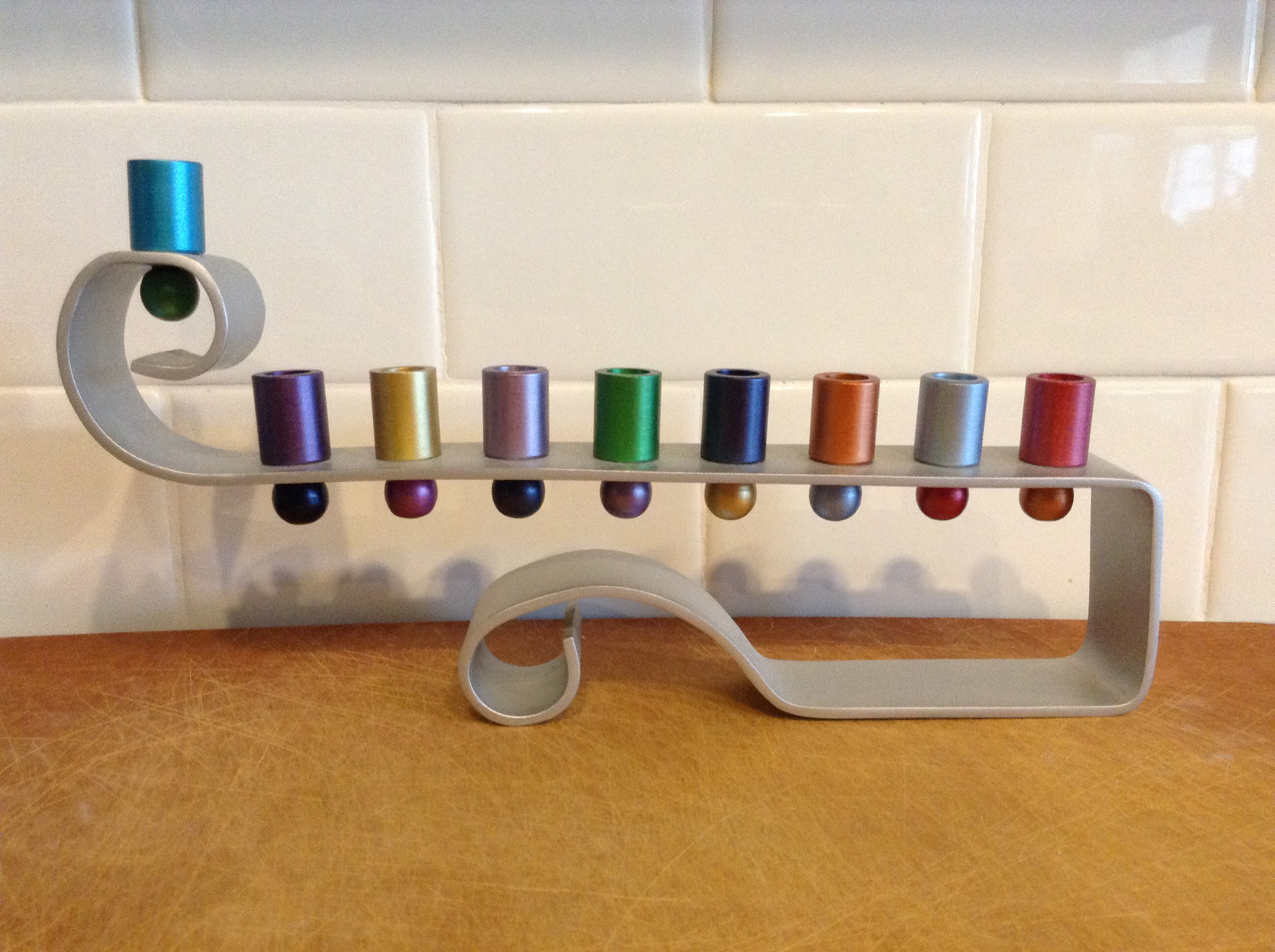
I found this colorful abstract menorah online. I think of it as what Easter Island would look like with curvy women figures:
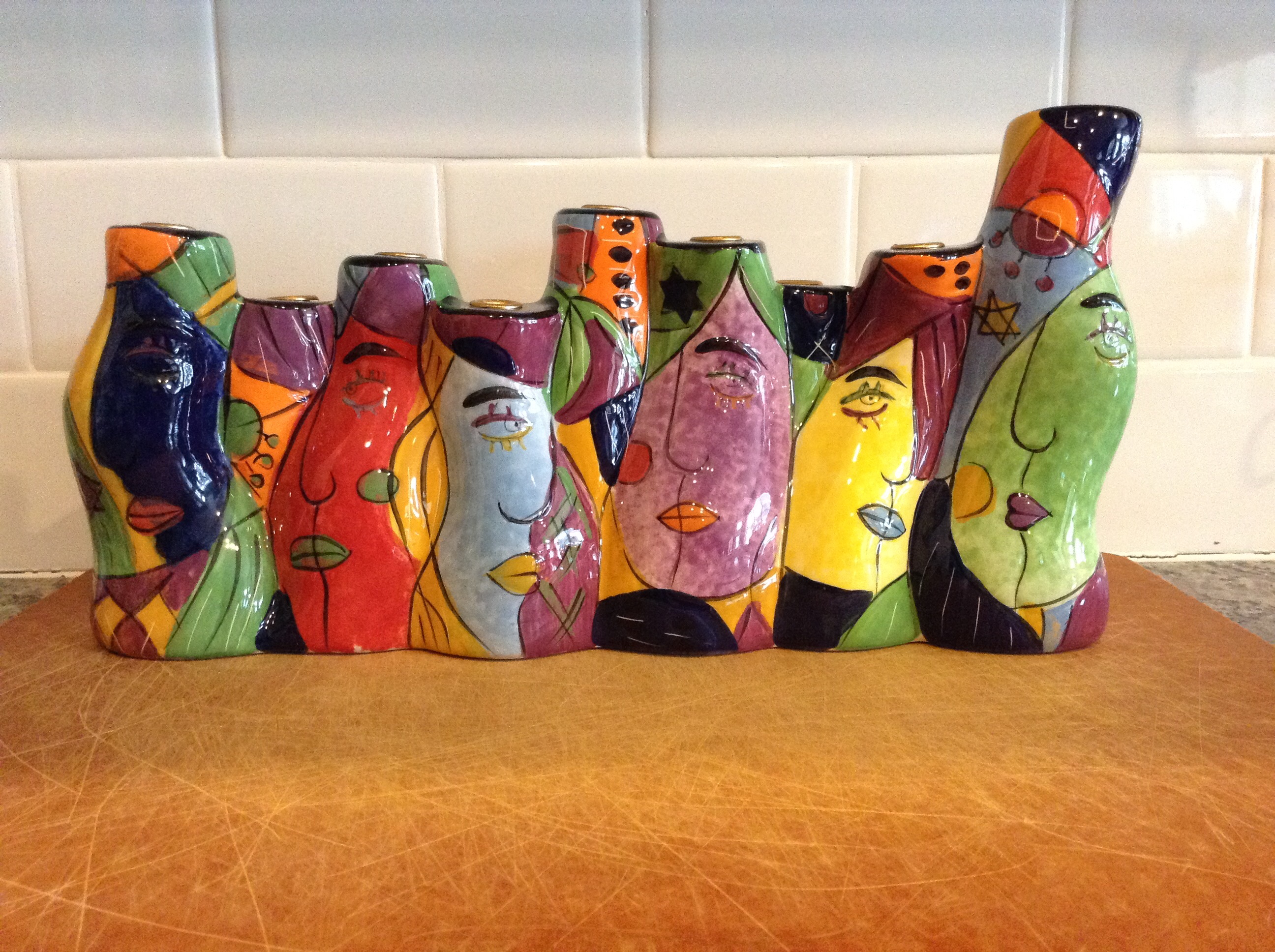
This is one of several I purchased from the gift shop of our new synagogue. Aside from this, no, the collection is not going to the dogs:

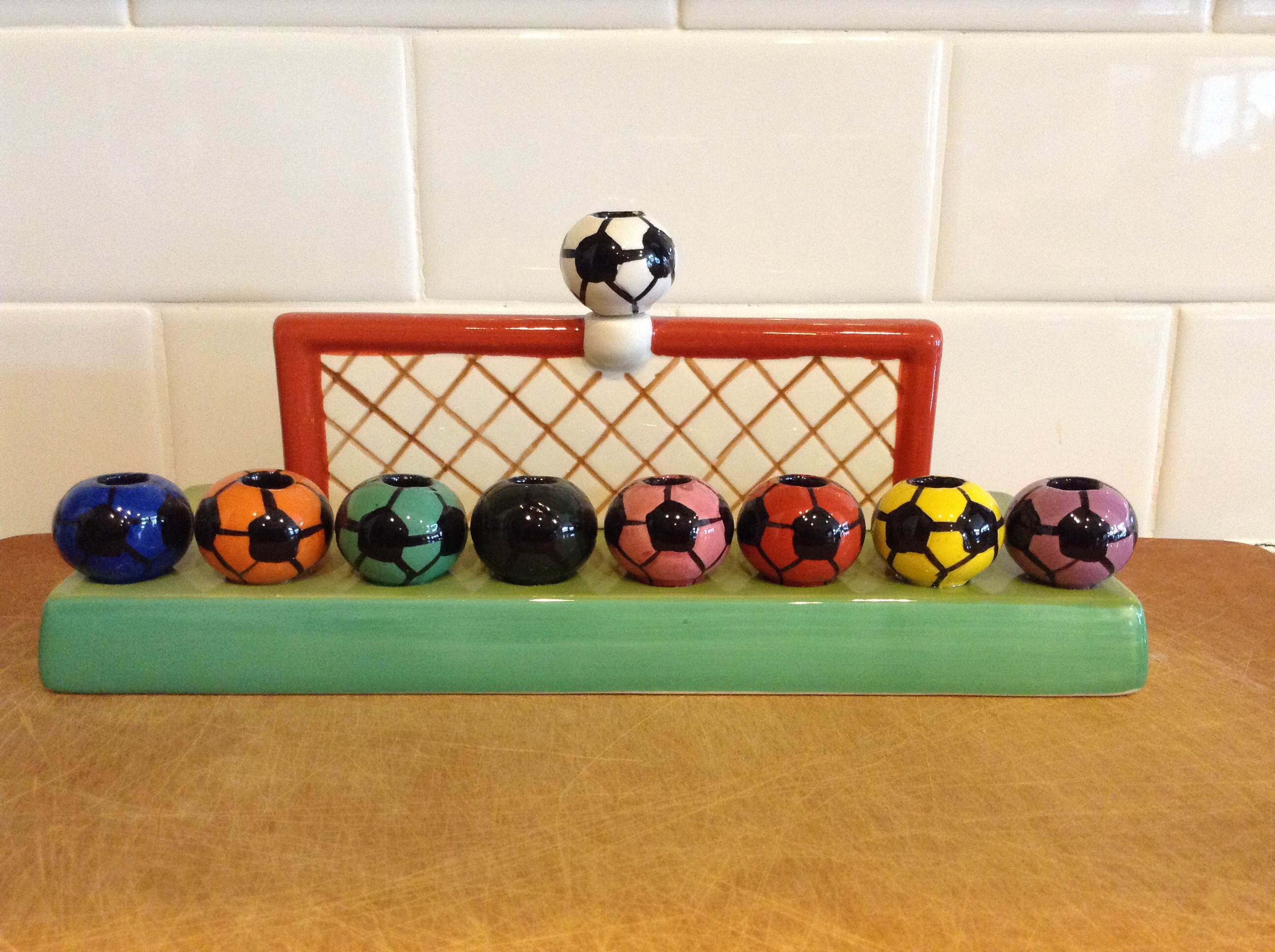
Another from the new gift shop. I got another one as a gift for the Jock and his fiancée (!), whom I shall dub the Jockette for blogging purposes.. She happens to be a soccer player:
Another find from the Internet:
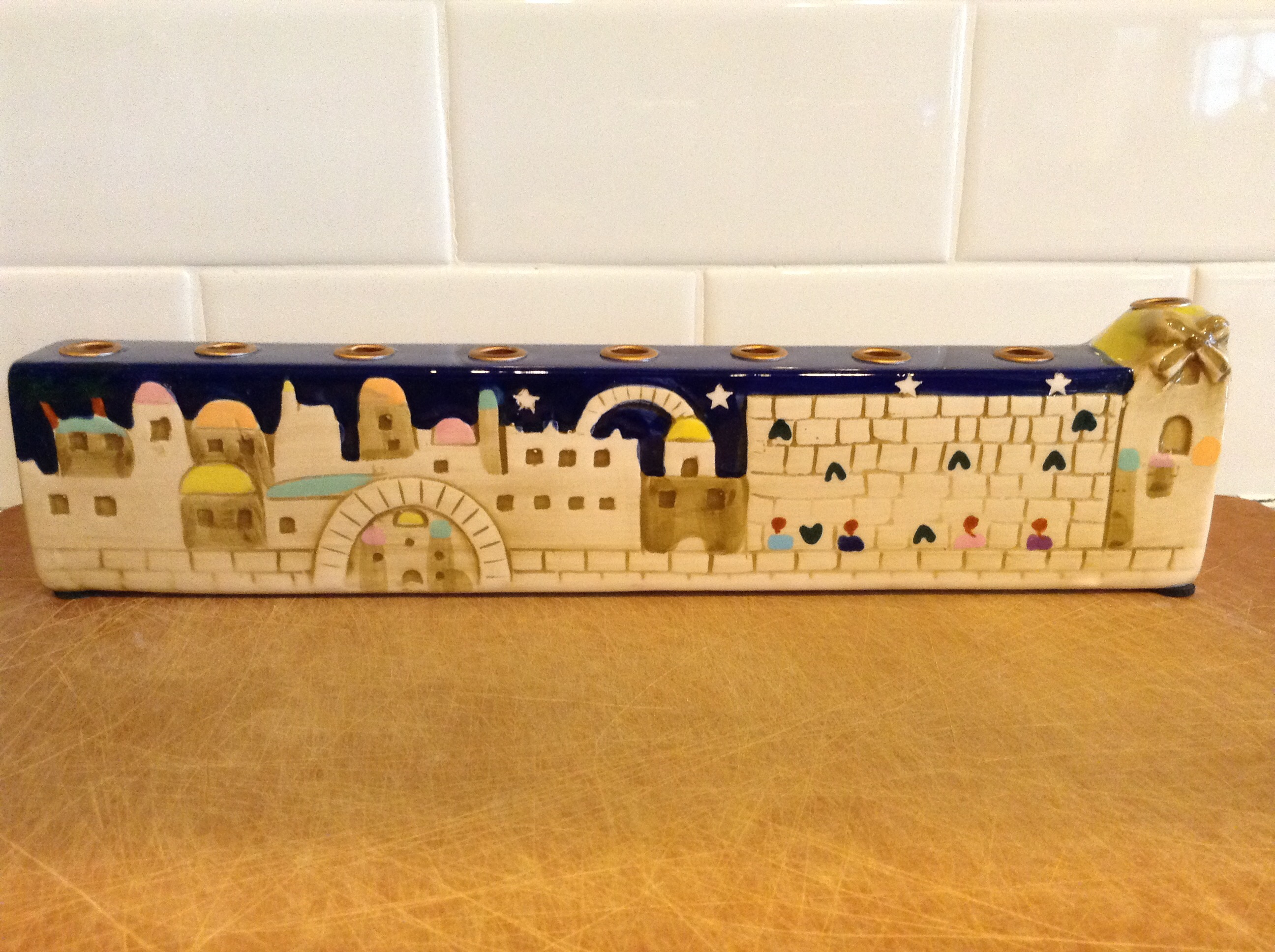
And another one:

Another one from the new synagogue gift shop, with a story. Apparently they had this one for quite a while. It had been stored up on the top of some cabinets, to where the heat rose, as physics tells us it is wont to do. Sadly, it melted the candles they had put in it for display, resulting in this magnificent addition to a work of whimsy:
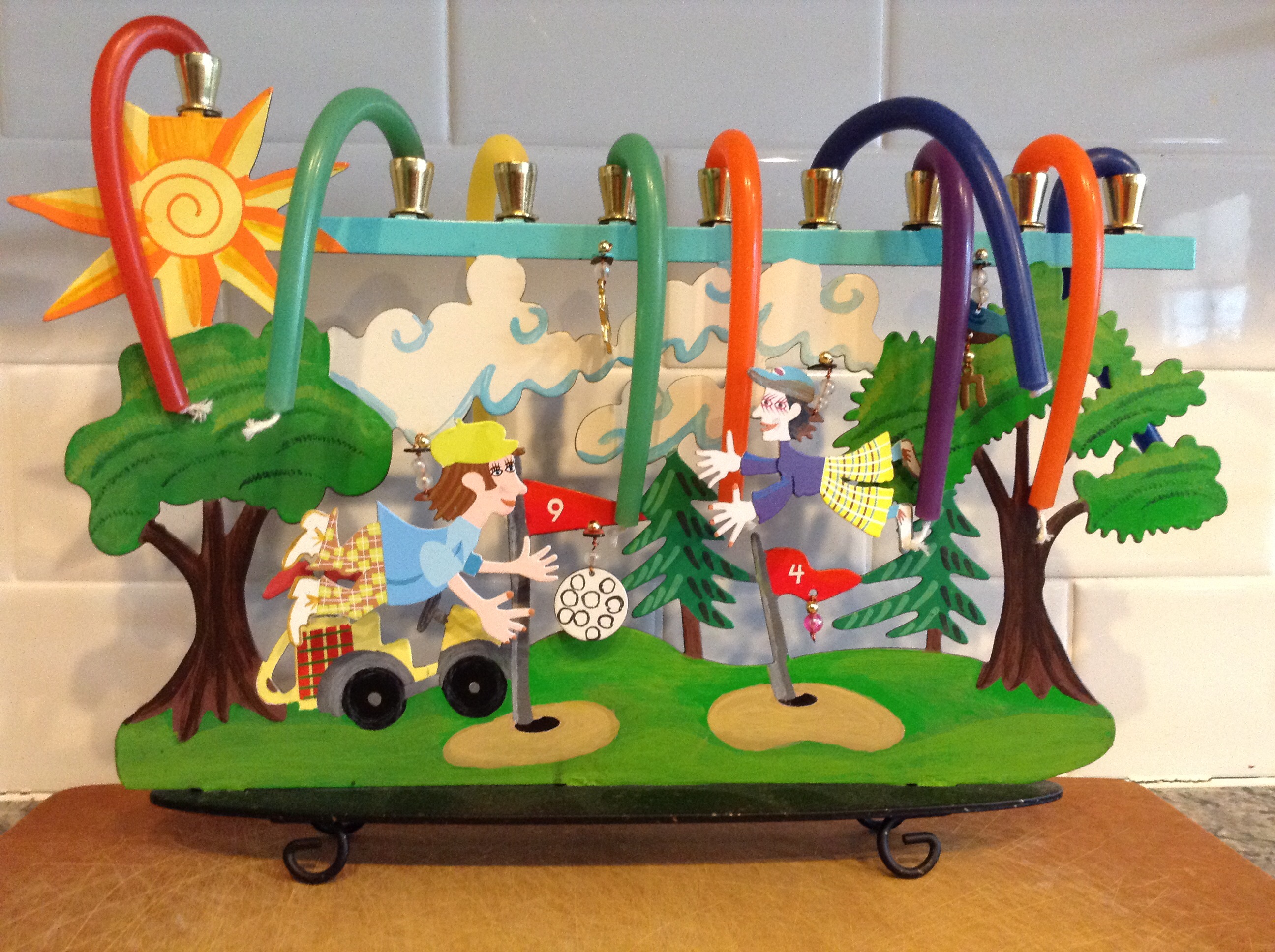
Technically this was the first purchase of the year, as we acquired it in Jerusalem on our trip to Israel back in January:
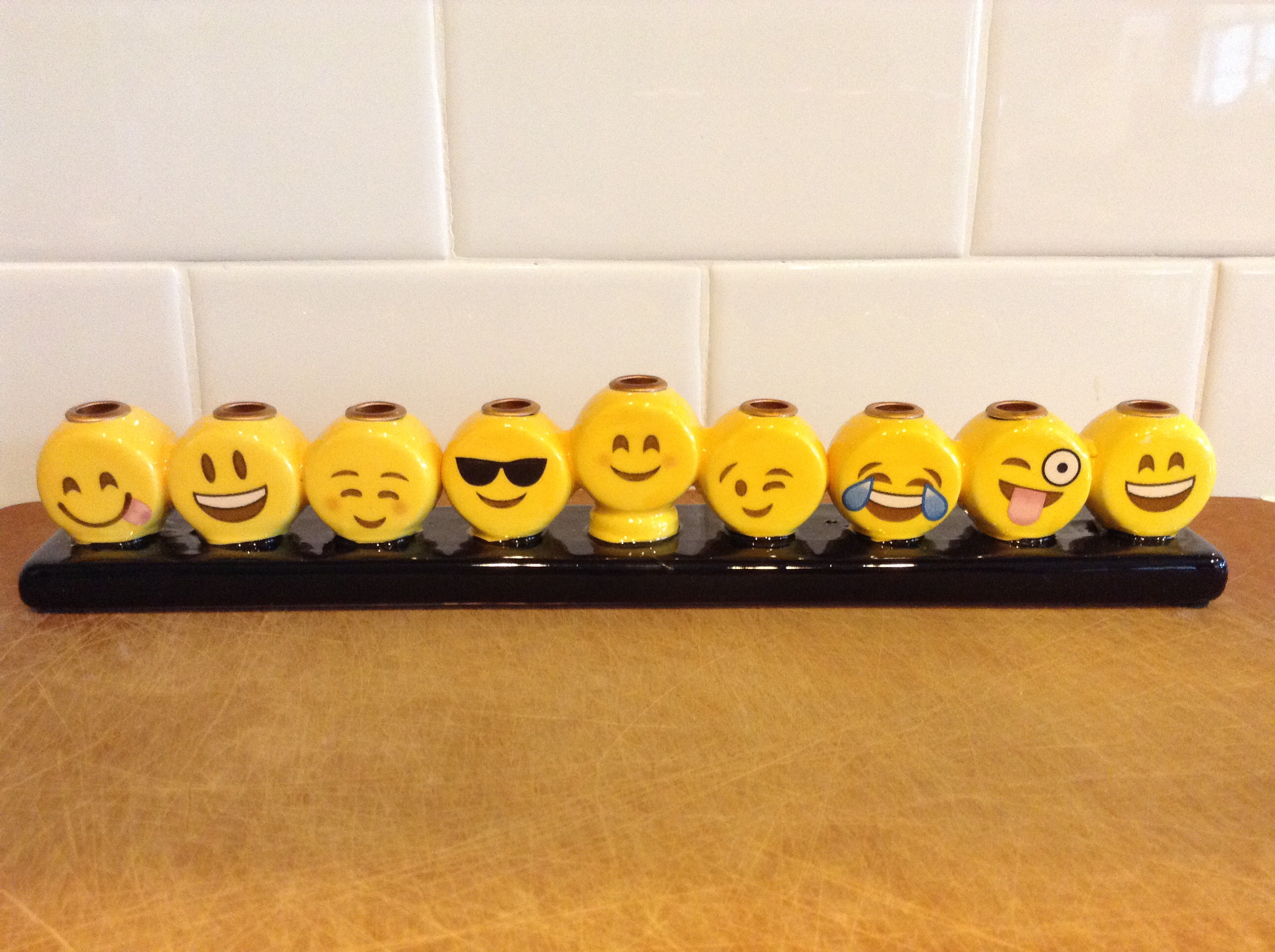
This was a gift from the Jock and Jockette; Emoji-norah:
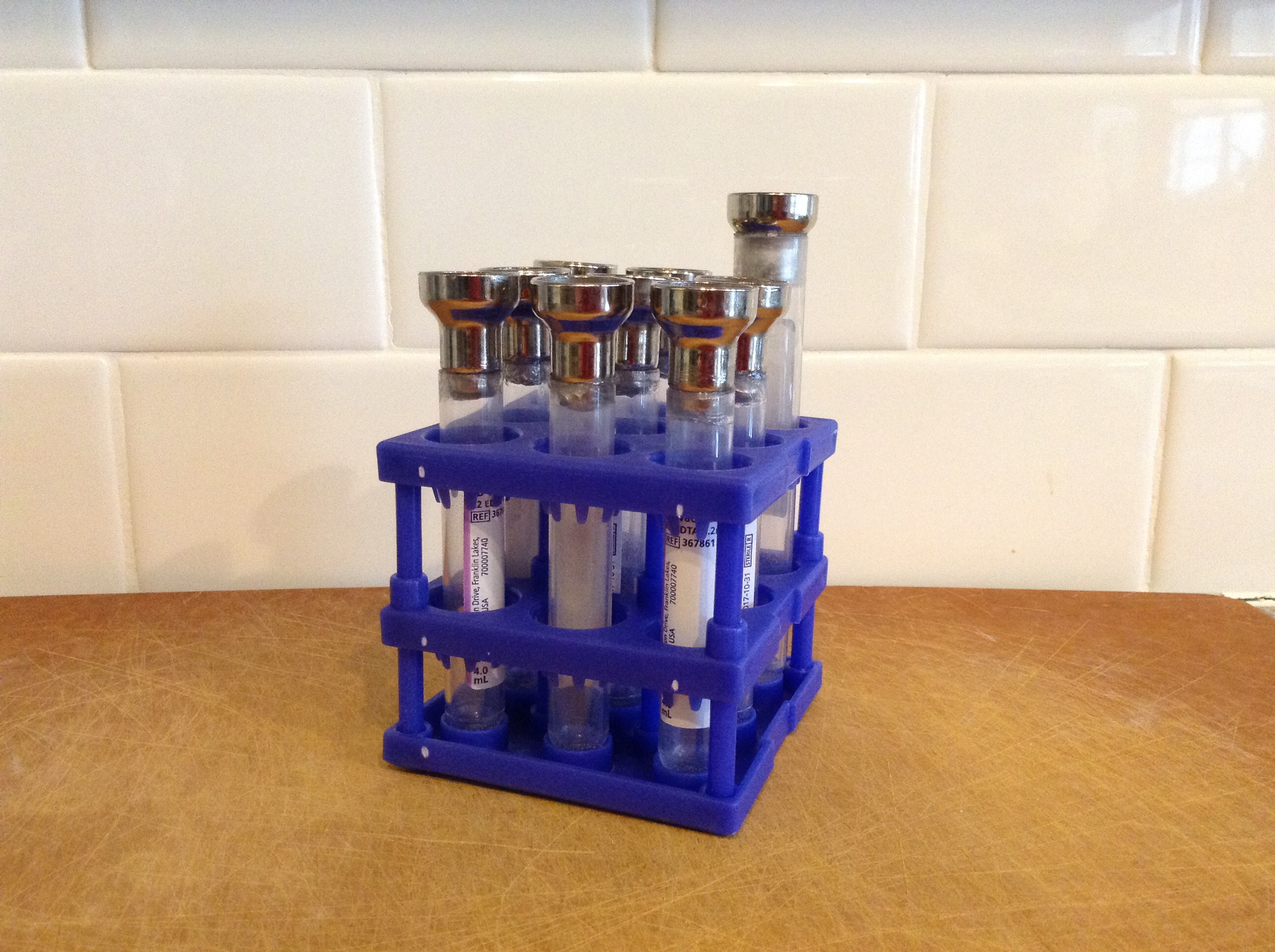
I made this one myself; Science meets DIY:
We also replaced our old electric menorah with this lovely LED version, sitting in the window, where it’s supposed to be:

That’s it for this year, in more ways than one. Hope everyone had a Merry Christmas, a happy Hannukah, with best wishes for a very happy New Year.
Posted in Family/Personal
Heard in the Exam Room
Still here, despite the slow blogging. Today’s offering is on the lighter side.
True stories:
90-year-old lady playing with her 6-year-old greatgrandson.
Kid (rolling around on the floor): Greatgrandmom, can you do this?
GGM: Oh no, honey, I can’t do that.
Kid (doing a somersault): Can you do this?
GGM: No, dear, I can’t do that.
Kid (jumping up and down): How about this?
GGM: Nope. Sorry.
Kid: Gee Greatgrandmom, can’t you do anything?
GGM: (thinks for a second) [flips her dentures out of her mouth, then slips them back in again] How about that! Can you do that?
Kid: [shocked silence]
********************************
Second true story:
I met a lovely young man, well-spoken, intelligent, a fellow grammar nazi. He happened to be from Nigeria. After sharing our favorite grammatical pet peeves, I asked if his country of origin was a source of difficulty or of amusement (Do people ask if you’re a prince? Do you say, “Sure, didn’t you get my email?”) Turns out it was mostly amusing, although he shared with me that in college, he once held the worst possible campus job for someone from his country: telephone solicitation of alumni.
I see his point. Would you give your credit card info to someone from Nigeria?
He told me that during one call, the gentleman was about to give his card number. His wife in the background could be heard saying: “He’s from Nigeria? Hang up the phone!”
A Few Days Later
It was a bad week. I know a lot of other people who felt the same. I happen to be fortunate enough to live in an area where the vast majority of the population shared my dismay, but it was still difficult. Not much sleep. No appetite. Hard to concentrate. Anhedonia.
Calls for “healing” and “moving on” didn’t help. I feel assaulted, and it’s just too soon to try forgiving my attackers.
I had to keep going, though, so this morning I went downtown to work at one of my side gigs. Actually, I was there last week, but someone called out so they asked me to fill in this week as well. So I went.
It’s a Suboxone clinic*. A crazy-busy place where people struggling with addiction come to get a prescription medication that allows them to lead a normal life — their words — in conjunction with psychotherapy and close drug monitoring. They are probably the only buprenorphone prescribers in Pennsylvania who take insurance**. They average 200 patients per session, but because of the SEPTA transit strike last week, there were lots of folks who had to re-schedule.
I’ve been working there since June, and I love it. Don’t get me wrong: I love my practice, but reassuring yuppies that their back pain will go away in a few weeks and trying to explain why they don’t need antibiotics for their bronchitis doesn’t exactly feel like the cutting edge of saving lives and easing suffering. But this place does. These are people who have struggled with demons more malignant than I can imagine. They have seen loved ones murdered, lost others to overdoses, suffered rape and abuse; the entire gamut of human suffering. Yet they are the ones who have chosen to fight. To come and ask for help.
Many doctors don’t like addicts, an understandable attitude given many of the experiences we’ve had with them. The manipulation, the lying, the untrustworthiness; we’ve heard it all, and we’ve all been burned. But this is an extremely structured and protocol-driven setting. Every patient must have a urine drug screen after every visit. Dirty urines prompt a Probation program, with increased therapy and more intense followup. As long as a patient is working the program, we’ll write their refills.
It’s downright inspiring. There’s a real sense of making a difference in someone’s life; one that could literally be the difference between life and death. I don’t think there’s a single patient in that clinic who hasn’t lost someone to drugs. They know all too well how important this medication is to them. And I feel privileged to have the opportunity to help them.
And you know what? Thirty patients and four hours later, I felt better. Still worried sick about the future, but not quite so down. An unexpected benefit of helping others.
*Suboxone is the brand name for buprenorphine/naloxone, a “replacement” drug for opiate addiction that doesn’t produce the high of heroin (actually blocks its effects) but blocks the symptoms of opiate withdrawal. Whether someone on Suboxone instead of heroin is really “clean” or not is a matter of semantics. Medication-assisted treatment of opiate addiction has been shown over and over to be more effective than “total abstinence.”
** Many if not most doctors who prescribe Suboxone privately charge cash for the visit, often exorbitant amounts, including monthly returns.
The Day After
I feel like a cell in a body. A tiny little cell that’s part of something far bigger and more complex than myself.
It’s a body that has cancer. Not a terrible cancer. Something curable with appropriate treatment. The treatment wouldn’t be pleasant, but it wouldn’t be crippling. But it has to happen, because without it, the body really would die.
But the body has somehow inexplicably rejected conventional treatment, and decided to go with alternative medicine. Woo. Nonsense. Fantasy-based care.
- “That chemo is poison!”
- “The drug companies are all in cahoots, trying to keep me sick so they can make more money off me.”
- “My doctor has orange hair and small fingers, and although he’s never been to medical school, he says he can make my body great again. So what do I have to lose?”
I am trembling in fear, because as a tiny isolated cell in this sick, sick, sick body, I could very well die. And there’s not a damn thing I can do about it.
Posted in Politics
I am a Terrible Doctor; and I’m Proud of it
It’s that time again. As the year draws to a close, various insurance plans try to finish collecting data to calculate bonus payments as “incentives” for “Quality” care. The only problem is that, as I’ve written before, all of their “Quality” measures are in fact nothing but proxies for cost, most of which I have no control over.
Back in the 1990s at the beginning of the Managed Care era, the model of the primary physician was that of gatekeeper. Twenty years later, the last vestiges of this model is the wretched “Referral,” a word which used to mean something but was co-opted by the insurance companies to become the magic key to unlock the door to specialty care. The original idea was that I could control where patients went; preferably to cheaper (sorry; more “cost-conscious”) places. Couple of problems with this:
- I have no idea how much any given doctor or group charges for any particular procedure, and even if I did,
- I have no control over their negotiations with the insurance plan.
If a patient wants to go to Hospital A for their procedure, the idea is that I can save the insurance company money by steering them to (cheaper) Hospital B. Good luck with that! Oh, I still refer patients in the sense that I make specific recommendations about what doctors I think would best be able to help them, but the vast majority of the electronic referrals we put in for patients are basically self-referrals. Patients choose; we type. That’s just how it works.
Some of the other “quality” measures I fall short of include:
Colonoscopies: Face it. There are a certain number of patients who just are not going to do this. (They actually say so: “I am just not going to do that.”) My panels are very small and very stable, which means that by now, I’ve talked just about everyone into it who is going to do it. All that’s left are the holdouts, which makes me look bad. Granted there are new kids on the block, technologies that rely on stool testing, which is marginally more acceptable to patients. Perhaps over the next few years, I may see my numbers on this measure turn around. But in the meantime, on paper, I’m a terrible doctor.
Mammograms and pap tests: same basic issue as colonoscopies, except that few of the insurance plans have factored in the latest evidence-based guidelines on screening frequencies. This means that while my patients may be waiting until 50 to have mammograms every other year and getting paps every 3-5 years after decades of normal tests, I fail because everyone everyone over 40 doesn’t have an annual mammogram or biennial pap.
Adolescent well visits: Guess what! Did you know that adolescence isn’t over at age 18? It goes well into your 20s, at least according to various insurance plans. Once my patients go off to college, I don’t necessarily get to see them every single year. I’d like to, but they can’t always make it. And I get dinged for not providing “quality” care.
I’m not a registered PCMH (“Patient Centered Medical Home.”) Why not? Because, as I’ve written before, a PCMH is a series of policies and behaviors to make a large practice work for the patient like a solo doctor’s office. Which I already am, and which I already do.The PCMH is something else too, though: it’s a revenue stream for the AAFP via TransforMED. My problem is that upon crunching the numbers, I don’t think I can get paid enough in bonuses and incentives to offset the (considerable) cost of achieving and maintaining the formal status of a “Medical Home.”
My generic drug prescribing rate is over 94% though. You’d think that would count for something, but somehow the fact that all my other “quality” measures bring me out almost at the very bottom of the list means I’m not holding my breath to see any “incentives.”
Whenever I get these “Quality” reports in the mail I read them over, gnash my teeth, and see if there’s anything I can realistically do differently. Then I put them away, and struggle to forget about them.
All I care about is taking care of my patients. My patients seem to think I do this pretty well. I try very hard not to spend their money if I don’t have to, which they also appreciate. I return their calls as promptly as I can, and am available 24/7 by phone, text, email, Facebook, whatever. I pick up my fair share of cancers and diabetes, and I work really hard with patients to control their blood pressure, cardiovascular and other risk factors. I think I’m doing a pretty good job. They’re not dropping dead around me. (Then again, I’m pretty aggressive at pushing palliative care, including hospice when appropriate. So when they do die, it’s as comfortably as I can manage.)
So if you look at the meaningless “Quality” indicators generated by various insurance companies, I look like a terrible doctor. But it’s because I work so very hard to ignore them. Trying to put a few more dollars into my pocket is not going to result in better care for my patients, and that’s what really matters to me.
So yes: the insurance companies say I’m a terrible doctor. And I’m proud of it.
Posted in Medical
Inventing a Recipe
Happy Jewish New Year!
One of the staples of the holiday is round challah, a rich egg bread in a round shape. Yesterday I experimented with creating a recipe for it on my own.
Well, not entirely all on my own. I had a ration to work with: 5:3. Five parts flour (by weight) to three parts liquid. That, plus the fact that I already know how to make bread (i.e. techniques for mixing ingredients, kneading, etc.) and away I went.
I also took pictures:
First I measured out 40 oz of flour:
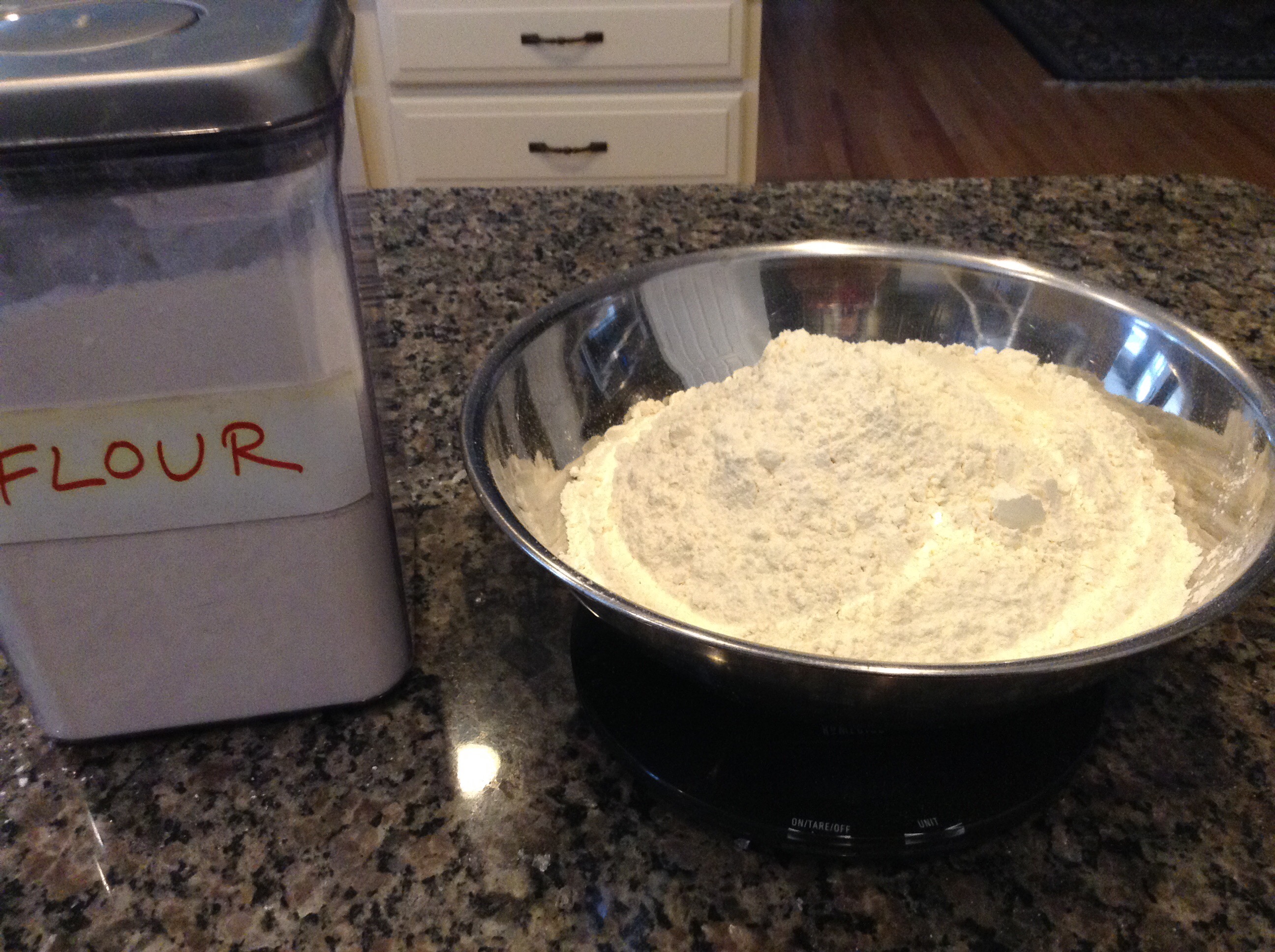
That meant I needed 24 oz of liquids. I had 5 eggs left in the box, so I took one of them, separated it, and saved the white to brush over the loaves before baking. Then I threw the rest in. That added up to about 8 oz. Next I added 4 oz of honey, and 4 oz of shortening. Just for the hell of it, this time I decided to try coconut oil. I usually use butter, but this way the bread would be pareve; neither meat nor dairy, if anyone who cared about keeping kosher happened to eat some.
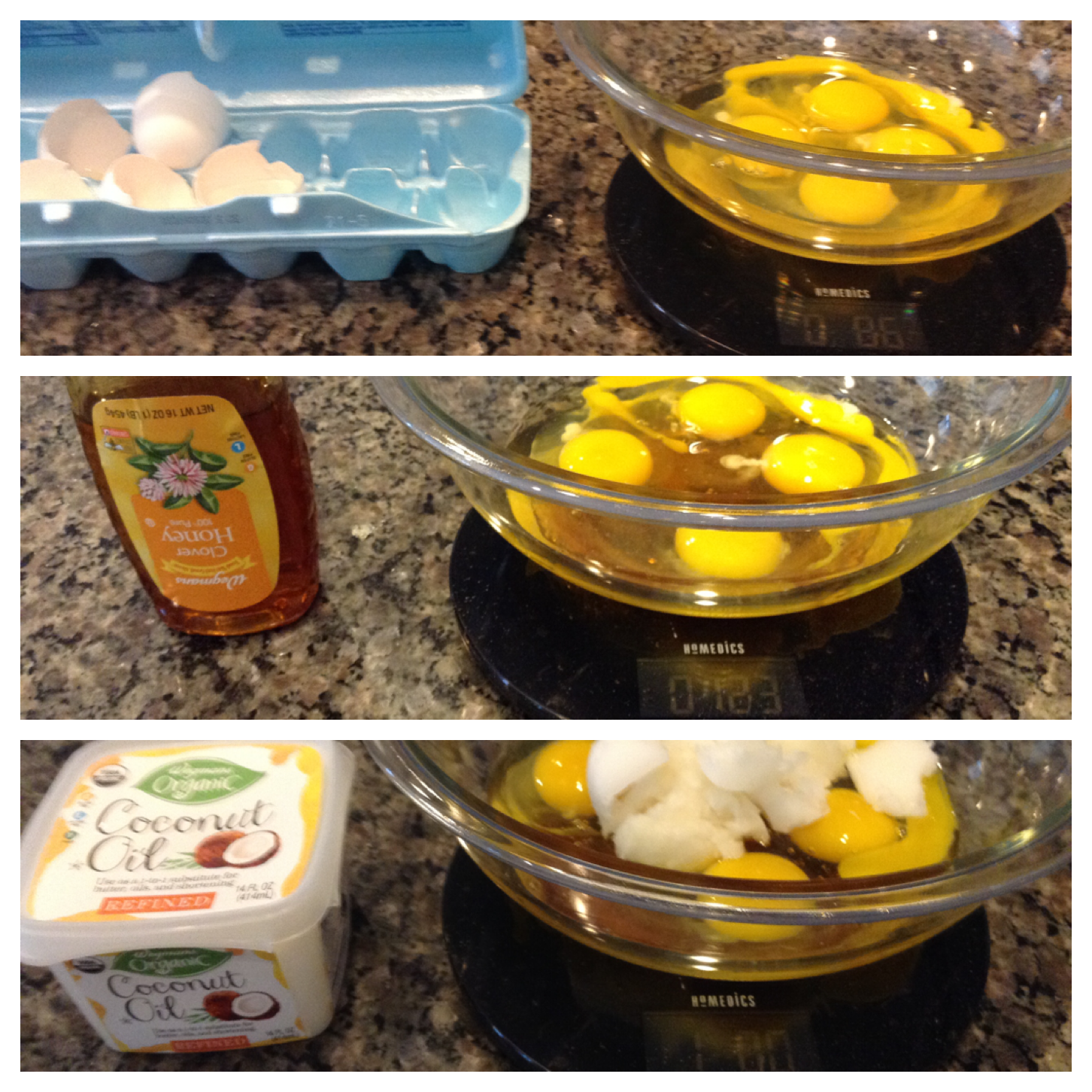 That left 8 of my 24 oz, so I used a cup of water which I heated in the microwave, and then dissolved the yeast in it. I mixed the wet ingredients up really well with a fork, then threw about a teaspoon or two of salt. Then I started stirring in the flour: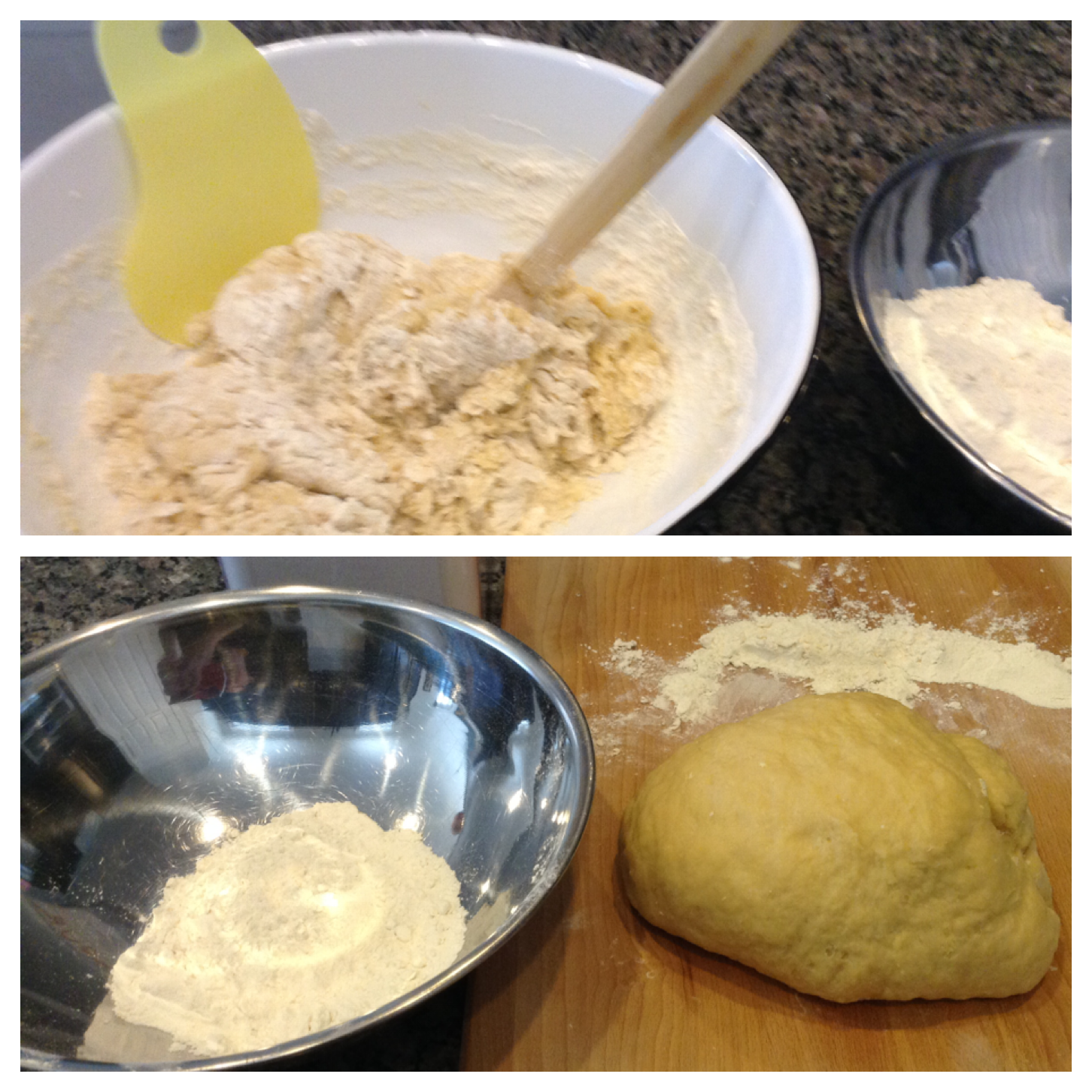
See that plastic yellow thing the size of a miniature painter’s pallette? That’s my secret weapon that I use to mix in the last third of the flour; it’s really more like kneading than mixing, and it works great. As it turned out, I didn’t actually use all the flour I’d measured out, because I didn’t need to. That’s where the experience came in, knowing when the texture was just right.
First rising was about an hour until doubled in bulk. Then I punched it down, and finally I shaped it into a cool round braid:
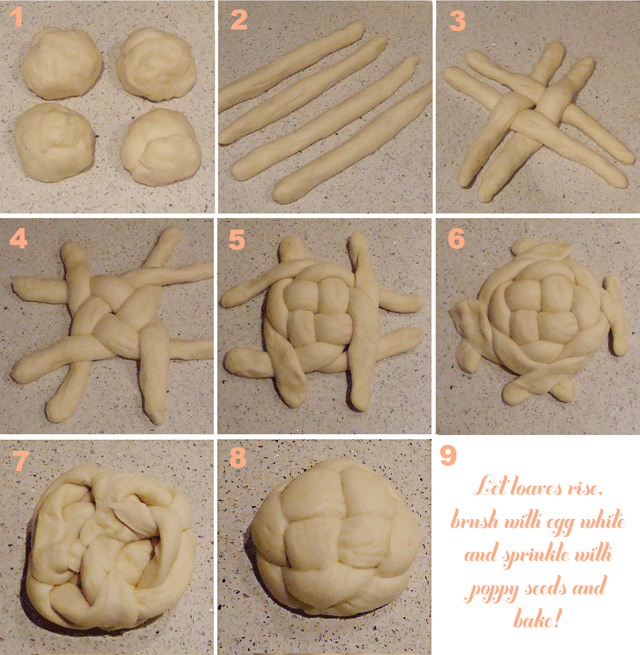
let it rise again, then brushed with the reserved egg white, baked at 350 degrees for about 25 minutes. And voila: 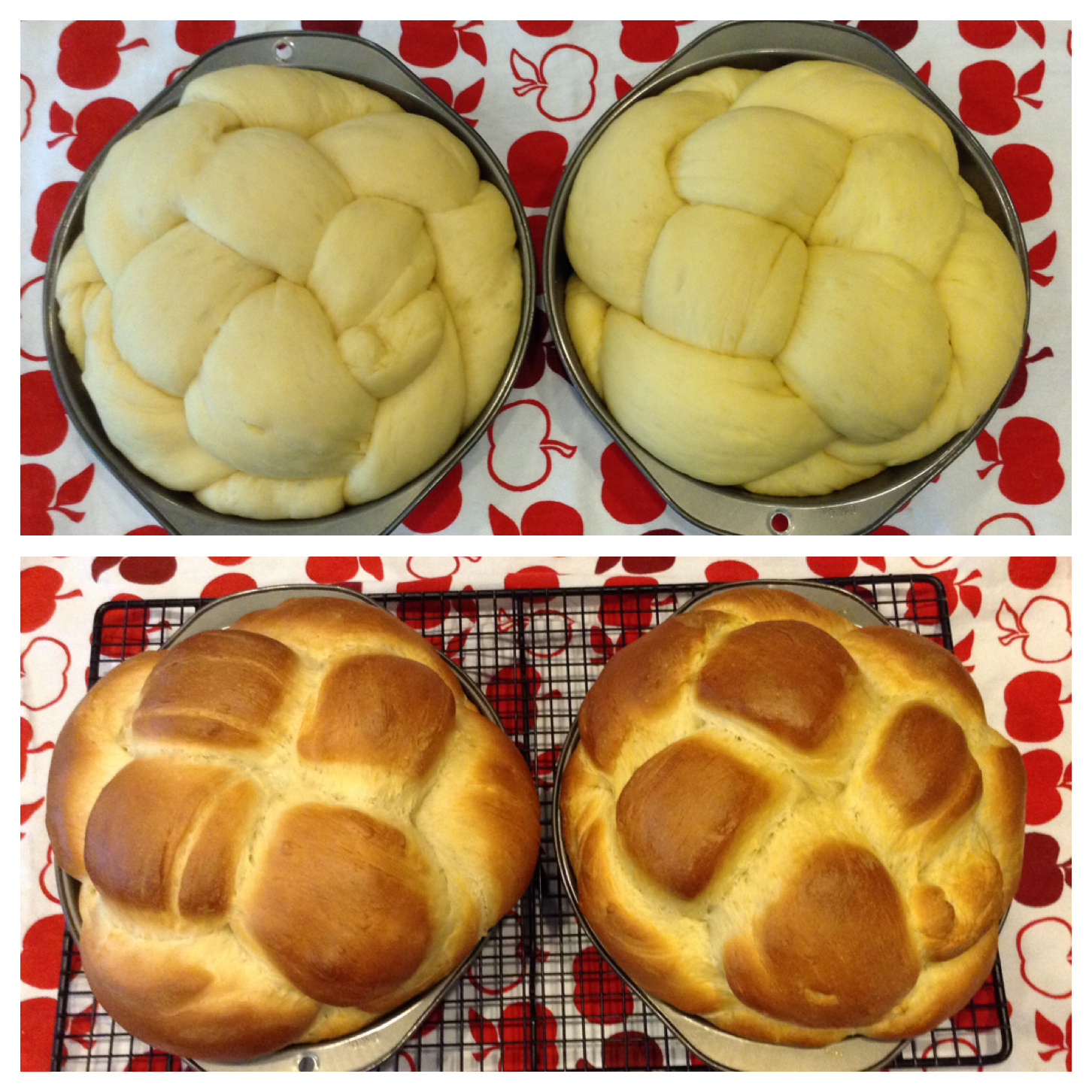
The end result: it smelled heavenly while baking. The crumb (texture) was perfect. I thought the taste was set enough to, but just the slightest bit bland, likely because of the coconut oil. Next time around I may use peanut oil, unless I know butter will be okay.
Happy New Year.
Posted in Food
Twenty-Seven Years
Twenty-seven years. More than a quarter of a century. Maybe not much in terms of a tree, but rather a long time.
Time for a babe in arms to reach adulthood, complete with a condo, live-in girlfriend, three cats, and a PhD within spitting distance.
Time for a medical practice to begin, grow, expand, and contract again until it is just the right size for a solo dinosaur.
Twenty-seven years ago today I hung out my shingle in front of a tiny basement office. I saw three patients that first day but only three more the rest of the week. I’ve had my ups and downs; overall, more of the former than the latter. Paper charts have turned electronic. Guidelines have come and gone. We’ve stopped prescribing antibiotics for bronchitis but begun using them for stomach ulcers. Open heart surgery for coronary artery disease has given way (about 90%) to balloons and stents. Too many other changes to catalogue on the spur of the moment.
And yet so much has stayed the same. Parents of newborns are no less terrified at the awesome responsibility of a tiny human. Pain, fear, grief, loneliness, and anguish haven’t changed. People who are hurting darken my door, and I consider it a victory to lessen their load, however slightly.
It’s been a helluva ride. And the best part is that it’s not over. Far from.
Twenty-seven years, and I’m still having fun. What more could anyone ask?
Posted in Family/Personal, Medical
Alternate History
In an alternative line of history, I’d most likely be going down to Washington DC this weekend for a party. In this alternate history, today would have been my parents’ 60th anniversary. Falling on a Friday, dollars to donuts says we would have partied on Saturday. And what a party it would have been. 60 years is quite a long time; worth celebrating.
But my mother died thirty years ago, when she was younger than I am now. She never saw my kids or any of her other grandchildren. She never made it to the 21st century; never used an iPad or a smart phone. How she would have loved the Internet, early adopter that she was.
Then again, if that alternate history had come to pass, I’d only have four sibs instead of six; six nieces and nephews instead of nine. If I even had a daughter, she’d have a different name.
And in this timeline — which is really the only one that matters — I got to go to Washington two weeks ago for another party: my step-mother’s 80th birthday. And what a party it was! Well worth celebrating.
But for today, I’m allowed to think of that alternate history. Because 60 years is quite a long time.
To GHS and MRNJ: All my love, always.
Posted in Family/Personal
New Writing Gig
Although it looks like I’ve gone nearly silent here (I haven’t; promise) I’ve been doing some other gigs lately.
Check out my new article:
Toilet Talk; What Does Your Waste Say About You?
I know you’ve always suspected, but now it’s all too obvious: I really do have a potty mouth.
Posted in Writing
Veggies
For a much longer time than I’d like to admit, my dietary advice to patients was squarely in the “Do as I say, not as I do” department.
I’ve never liked fruits or vegetables. Oh, I’d eat salads, but not with tomatoes. I can’t stand tomatoes. I love cucumbers, but not the seeds. Once I discovered the seedless ones, though, I couldn’t get enough. Potatoes, of course. Onions were okay, but only cooked. That was about it.
Over the years, though, I can’t tell if I’ve become more adventurous, or just less rigid. I started adding red peppers to my salads. Then I found a magnificent recipe for a Watermelo Gazpacho, which I now eat for lunch every day.
Just to prove it to my family (ie pix or it didn’t happen) here’s my grocery cart last time I went shopping:
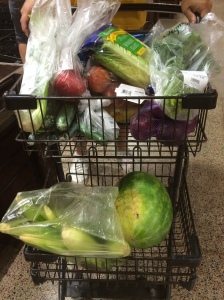
Watermelon Gazpacho recipe available upon request.
Posted in Family/Personal, Food
It’s Happening; Unintended Consequences of “Quality”
Once again, I called it!
Some of my previous takes on the fallacies of “Quality”:
The biggest mistake made by Medicare, private insurers, and other entities seeking to improve medical care by rewarding “quality” is mistaking it for “performance”.
The real reason doctors have begun “requiring” that patients undergo all manner of screening interventions is to enhance their compliance ratios. After all, the quickest way to get to 100% is to get rid of everyone who falls short.
Now it’s moved to hospitals:
Hospitals are throwing out organs and denying transplants to meet federal standards
Yes, you read that right:
Hospitals across the United States are throwing away less-than-perfect organs and denying the sickest people lifesaving transplants out of fear that poor surgical outcomes will result in a federal crackdown.
As a result, thousands of patients are losing the chance at surgeries that could significantly prolong their lives, and the altruism of organ donation is being wasted.
“It’s gut-wrenching and mind-boggling,” said Dr. Adel Bozorgzadeh, a transplant surgeon at UMass Memorial Medical Center in Worcester, Mass.
Go ahead and read the whole thing.
CMS’s latest push to revamp Medicare payment systems to reward “Quality”, a word never defined except in terms of dollars and cents, has an excellent chance of being the final straw that breaks the back of medical care in America.
Un-***ing-believable!
Posted in Medical
Vaccines Do Not Cause Autism, and Hillary Clinton is Not a Liar
What on earth do anti-vaxxers and Hillary-haters have in common? I’ll tell you:
They are terminally resistant to actual, verifiable FACTS.
As has been shown over and over by numerous scientific studies, vaccines have absolutely no relationship to the development of autism or autism-spectrum disorder. None. Zilch. Zip. Nada. That association has been debunked, disproved, laid to rest. It is false.
None of that proof stops people from continuing to believe it, though. Anti-vaccine drivel drips from every corner of the Internet. Why? Because certain people want to believe. They don’t trust doctors, or scientists, or drug companies, or anyone but themselves with the well-being of their precious offspring. The irony, of course, is that trying to protect their kids from the “evils” of vaccines exposes them to the actual scourge of vaccine-preventable illness.
What does all this have to do with Hillary Clinton? This:
The most thorough, profound, and moving defense of Hillary Clinton I have ever seen
This magnificent article, written and originally posted on Facebook by Michael Arnovitz of Portland, Oregon, details what is essentially the decades-long slander of Hillary Clinton. His bottom line: the root of Hillary-hate boils down to plain, old, garden-variety sexism.
Want some more? Here is PolitiFact’s report card on her:
The PolitiFact scorecard: Hillary Clinton
- True: 53 (23%)
- Mostly True: 67 (29%)
- Half True: 50 (21%)
- Mostly False: 34 (15%)
- False: 26 (11%)
- Pants on Fire: 4 (2%)
I get that there are plenty of people out there who disagree with Mrs. Clinton about her policies and positions, and that’s valid. Call her a bitch, a harpy, a shrew, whatever you want; those are opinions, to which everyone is entitled.
But just like the anti-vaxxers, because you are not entitled to your own facts, when you call Hillary Clinton a liar, I call bullshit. You don’t have to like her, but you’re not allowed to make stuff up. Hillary Clinton is a woman, a lawyer, a wife, a mother, a grandmother, a former First Lady (of both Arkansas and the United States), a former Senator, a former Secretary of State, and the Democratic nominee for President of the United States. But she is not a liar.
Posted in Politics
Openings: Part 1
What are the worst Chief Complaints you’ve ever heard?
For the non-medical reader, the Chief Complaint can be thought of as the patient’s opening statement. It’s what shows up on the schedule as the only thing I know about why the patient is there. I’ve compiled a brief and definitely non-exclusive list of the worst chief complaints I’ve ever seen; the ones that make me sigh in advance, knowing that taking the history is going to be like pulling teeth and that the patient is probably not going to be satisfied.
Here goes:
- “Nerves”
- “Fatigue”
- “Depression”
- “Anxiety”
- “Low back pain”
- “Dizziness”
- “Numbness”
- “Palpitations”
- “Chest pain for three years”
- “My breathing is funny”
- “Sick”
- “Chronic” anything
- “Couple of things”
- “Just a few questions for the doctor”
And my favorite:
- “I’m just not right”
Feel free to add more in the comments.
Posted in Medical
Thirty Years
Thirty years is a long time. A helluva long time.
Thirty years after I graduated from college, I wrote about taking my youngest child to begin his career there. Damn good piece, if I do say so.
2012 was a big year in my family. Multiple graduations, weddings, milestone birthdays and anniversaries got me thinking about my mother, who by dying in 1986 had missed out on the entire lives of her grandchildren. I wrote this poem and posted it that year.
I’ve posted other things on this date, my mother’s yahrzeit, in previous years: 2015, 2014, and 2011, in addition to the above link to 2012. But for some reason, today the words “thirty years” pack a special wallop. I re-read my poem (damn good, if I do say so) and decided to post it again. (Please don’t sue me for plagiarism):
Gone too soon, gone so long, a dozen lifetimes ago;
Blankets and booties to caps and gowns; seasons change, ebb and flow.
We pause; we think; we imagine; we recall.
Piano recitals, horses to show, Frisbee, hockey, ballet,
From the sidelines of soccer to the banks of the regatta,
We daydream; what if?
In moments of silence, alone with our thoughts,
Or gathered together in the raucous din that is our joy,
The light of remembrance shines on in our hearts.
Though we only light this candle once a year,
The memories we hold are always near.
Gone so long, gone too soon, a dozen lifetimes ago;
Seems like yesterday; seems like eternity;
Dozens of lifetimes to go.
Posted in Family/Personal
Intellectual Suicide
Physician suicide is an enormous problem. We lose approximately 400 doctors and trainees annually to suicide. This is a tragedy, pure and simple. Not limited to the human carnage of the equivalent of an entire medical school class or more, but, to quote Dr. Pamela Wible, “Each year more than one million Americans lose their doctors to suicide.”
What does it mean, then, when physicians who are trained in medicine — defined as the application of scientific principles to the diagnosis and treatment of human ills — turn away from reality to accept the magical thinking of pseudoscience? I submit that it is intellectual suicide. It may not seem to patients as if they’ve lost their doctors, but when physicians stop practicing medicine and embrace magic, those patients are no longer receiving medical care. There is such a thing as being too open-minded; your brain really can fall out.
Currently known as “Functional medicine” or “Integrative medicine,” it was formerly referred to as “Complementary” or “Alternative”, sometimes “holistic” or “natural.” Quackery is still quackery, no matter how hard it tries to re-brand itself over the decades. It encompasses, amonth other things, Natuopathy, chiropractic, homeopathy, Reiki and other forms of “energy healing,” and acupuncture. (Yes, acupuncture. Check out the archives at Science Based Medicine. Although widely considered to be efficacious, studies on it are fundamentally flawed. When studied properly it doesn’t work any better than a placebo. And placebos are fundamentally unethical.) Speaking of Science Based Medicine, by the way, this recent article is exactly what I’m talking about. It’s called “The Harm of Integrative Medicine from a Patient’s Perspective.” It’s riveting.
Alternative medicine doesn’t work. If someone takes it and gets better, there are only three possible explanations:
- They were going to get better anyway, and would have even if they hadn’t taken it.
- They didn’t have the condition in the first place. (This is likely the source of many apparent cancer cures.)
- The curative intervention was something other than the alt med one. Either conventional medicine was used concurrently, or the alternative medication was contaminated with actual active ingredients. Red yeast rice lowers cholesterol because it contains lovastatin, a recognized, well-studied pharmaceutical which happens to be much cheaper (on the $4.00 generic list) when purchased in drug form rather than as a supplement.
Why are supposedly intelligent, scientific physicians drawn to pseudoscience? I actually wrote about this back in 2008. (It’s a pretty good piece, if I do say so myself.) If you don’t feel like clicking through to read the whole thing, here’s the meat:
Far from gaining a new “faith” in alternative medicine (that requires magical thinking), I believe that these physicians have lost their faith. Faith that science and rational thinking are the best way to understand the physical world around us, including the human body. How easy it is to relieve the pain of not understanding by giving in to the idea that there are answers after all; energy fields; water with memory; the “mind-body connection.” That there is also an enormous, enthusiastic, welcoming community — cult-like — merely reinforces all the new “paradigms.”
Physician suicide is a tragedy. But so is integrative medicine and all its permutations of quackery, which push magical thinking and pseudoscience onto unsuspecting patients. Intellectual suicide is just as tragic for those who have entrusted their care to us.
Dialog: Doubling Down on Dropping Out
Dr. Wible and her young colleague have responded to my previous post: [Cross posting with her comment section, to share the clicky love as we continue the dialogue]
A few corrections to your blog Lucy:
1) I do NOT have a subscription practice. I see all-comers and I take insurance.
2) I have never turned anyone away for lack of money. I don’t believe in a two-tiered health care model.
3) Diet and nutrition is not woo (and is certainly not taught in med school). There are HUGE problems with allopathic medicine which does not prepare us to care for patients in an outpatient setting when it comes to prevention, lifestyle, and common sense things people can do to prevent taking drugs for the rest of their lives.
4) PAs and NPs are providing primary care in an outpatient setting with a lot less training and most are doing a great job. Physicians who want to practice outpatient medicine should not be held hostage to 3-4 year residency programs. There are not enough residency programs to meet the needs of current med school graduates. These students with 300K+ loans should not be sitting at home twiddling their thumbs when they could be caring for people like NPs and PAs.
5) And yes, I believe that residency programs can be shortened. How does working in the NICU help me provide care in an outpatient setting? There are so many parts of residency that could be structured in a more personalized way to meet the ACTUAL needs of patients and docs who plan to open neighborhood family medical clinics. A tertiary-care hospital-based Pharma-heavy medical indoctrination is not appropriate for everyone.
I could go on . . .
~ Pamela
P.S. I allowed my community and patients to design and define their OWN ideal clinic (which I opened based on 100 pages of their submitted testimony) and what they want and what residencies deliver are not a great match. Patient engagement is important – in fact essential – so let’s stop holding everyone hostage to a one-size-fits-all medical education system (that need to be TOTALLY revamped).
1) and 2): My bad. I seem to recall you talking about your practice being “full,” having a waiting list and so on, meaning you manage a panel. (I don’t.) Most people who do that are DPC or otherwise subscription based. Apologies.
3) Diet and nutrition (may as well throw in exercise as well) are not woo at all. I never said they were, nor does any legitimate doctor I know. However they are often used by alt med practitioners as a bait and switch for their actual woo, like naturopathy, chiropractic, homeopathy, and so on. As for that old canard about nutrition not being taught in medical school (not true, BTW) what we do learn about biochemistry and physiology allows us to understand nutrition at a much deeper level than anyone else, if we’re paying attention. In fact, truly understanding the basics allows us not to fall for each new fad diet that promises instant loss of belly fat. The really exciting new stuff about nutrition has to do with the gut microbiome, and how different people respond completely differently to exactly the same foods. Real doctors are the ones doing that research, not the ones with books to sell.
Use of the adjective “allopathic” is another flag that you’re setting up a false dichotomy between drugs and non-drug treatment, where presumably doctors ONLY use drugs. I use lifestyle measures (like diet and exercise) and “common sense” for prevention and treatment every single day. The idea that taking drugs represents some kind of failure is, in my opinion, foolish. Many people still need medications for things like blood pressure and diabetes even after optimizing their lifestyle. They certainly don’t have to “take drugs for the rest of their life,” but their lives will likely be shorter. The ability to use drugs appropriately is one of the skills developed in training. Opting out of that education is very much throwing the baby out with the bathwater.
4) Yes, there are many people providing primary care who are not residency trained physicians. However I reject your assertion that they are doing a “great job.” Google the Dunning Kruger effect: the less you know about something, the more confident you are about your knowledge. I’ve written about this with regard to PAs and NPs before. Patients love their NPs and PAs, just like they love their naturopaths, which basically means that they’re either never going to realize what lousy medical care they’re actually getting, or that if something untoward happens, they’re not going to blame them. Is graduate medical education perfect? Hell no! But fix it; don’t forego it.
5) I disagree strongly that residency should be shortened. Re-structure it? Absolutely. Spending more time in various outpatient settings, possibly free clinics where trainees can experience true undifferentiated primary care while still under the supervision of experienced faculty, would be fantastic preparation for independent practice. But one year of postgraduate training is nowhere near enough time to become familiar enough with primary care to practice safely and effectively on one’s own. All the CME in the world doesn’t make up for treating patients with someone who knows more than you do looking over your shoulder, pointing things out to you, and providing guidance. No, tertiary-care based training isn’t appropriate for everyone. Guess what! I did mine at a community hospital. Again, you’re offering a false dichotomy of “indoctrination” vs “following the dream.”
PS I’ve read all about your clinic, and I’m happy for you. Somehow I managed to wind up in pretty much the same place, but without going through the burnout phase that you did. Believe it or not, NOT everyone is driven the brink of suicide by medical training and practice.
As for “allowing patients to design and define” their ideal clinic, you have to remember that patients are not customers and are not always right. All too often they want things that are not medically appropriate. I have patients who would say that their Ideal clinic would be a place where they could get antibiotic prescriptions called in without a visit. Trying too hard to please patients can also lead to inappropriate narcotic prescribing. Slippery slope, that. I stick to treating my patients the way I want to be treated: same day appointments, communication any way they want, all labs called back personally; friendly, attentive, thoughtful, medical care. They seem to like it.
“Patient engagement” is indeed important, but it’s just the new term for what I’ve always done; involving patients in their own care, soliciting their input to treatment decisions, and providing lots of patient education. Frankly, my patients are most grateful when I take the time to explain why all those alternative treatments they found on the Internet are a waste of their time and money.
Her disciple, Kat Lopez, weighs in too:
…Did you mistake the Institute of Functional Medicine for woo-woo? You may want to check into it. The IFM is run by highly experienced MDs who have become world-renowned for their success in healing difficult diseases; the Cleveland Clinic just opened a functional medicine program because the efficacy of the approach is unparalleled (addressing the underlying causes of disease using nutrition and approaches to decreasing inflammation in the body).
Have you heard of Dr. Esselstyn or Dr. Fuhrman, eminent cardiologists who reverse severe coronary artery disease with diet alone? They’ve written several books, you may want to read one, they’re amazing. I think it should be illegal for docs to NOT reveal to their patients that there is a failsafe nutritional method to getting off their cholesterol meds, antihypertensives, diabetes meds, and gaining radiant health. Try reading up on those guys.
Also, writing off Mind-Body Medicine (I trained with Harvard’s Center for Mind-Body Medicine) as woo is a mistake – their unique approaches to mental health disorders (which I now teach as ongoing classes at my clinic), such as severe PTSD, has been shown my extensive research to far exceed the success of counseling and medication combined.
Sorry, Kat, but yes, every last modality you mention is nothing but solid woo, magical thinking, and pseudoscience. I urge you to check them all out at Science Based Medicine, my go-to site whenever I need to sort out science from pseudoscience.
On the topic of mental health, by the way, check out the writings of a wonderful young psychiatrist named Maria Yang MD. I’ve been following her through training, board exams, and now practice. She avoids the stereotypical portrayal of psychiatrists as the ultimate drug pushers without ever invoking the kind of woo at Harvard (no, the name doesn’t impress me) and elsewhere. Food for thought, as you say.
Posted in Medical
Dropping Out is NOT the Answer
I like Dr. Pamela Wible. I think she’s doing fantastic work bringing attention to the tragedy of physician and medical student suicide. We also have similar practice styles (solo, unhurried visits, total communication) although hers is a subscription practice and I still make do with insurance. Also, she’s monetized it with the title Ideal Micropractice, an organization which costs $250 a year to join. After 26+ years, I’m pretty comfortable with my version, which is ideal for me, and can’t see paying for the privilege of sharing what I’ve learned. (I just offer it for free to anyone who asks.)
But her latest blog post, titled “Yes! You can open your dream clinic — without completing residency” crosses the line.
A video of a frustrated young resident, complaining that her residency was just training her to become a “robot doctor”, waxes rhapsodic on the joys of dropping out and opening her own practice. Complete with naturopathic medicine, acupuncture, “body work” (whatever that is; massage?) and “functional medicine” of course. All with the approval and support of her marvelous mentor, Dr. Wible.
Granted Dr. Wible lives in Oregan, where the woo flows deep and fast (ie, “alt med” is widely accepted.) But just because lots of people believe in unscientific nonsense dressed up as “medicine” doesn’t alter [see what I did there?] the inconvenient realities of science, human disease, and medical treatment.
Why stop at dropping out of residency? Medical school is dehumanizing and abusive. Why bother with it? Just take a few online courses and open up your Alternative Wellness Center right out of college. In fact, why even bother with college. Or high school. Wisdom from the mouths of babes, you know. Harness the healing power of innocence!
More from the dropout:
I started to realize that I have all of the emotional intelligence, the educational prowess, the passion and the drive to truly live my personal dream…
Sure, you can drop out of residency and open your own clinic. But no, you are not qualified to do so as an actual doctor. I’m sorry, but being a doctor takes more than emotional intelligence, educational prowess (whatever that is), passion and drive. It takes training and experience — more than you can get after only one year and a medical degree.
And by the way, those 1-year DO internships “intended to be adequate training for primary care” are a long gone thing of the past. Even DOs recognize the need for at least 3 years of postgraduate training. And some very good cases have been made that maybe even that isn’t enough.
Real medicine is hard. You’re not going to be able to cure everyone, or give everyone what they want, or make everyone happy all the time. Too often people come to us with unrealistic expectations. Alt med feeds into this by providing unrealistic solutions. Until you actually get sick with something that needs real medicine to treat. And if your alt med practitioner can’t even recognize that, you’re basically dead. When you didn’t have to be, that is. Sadly, I know lots of people who have heeded the seductive siren call of alt med — and most of them completed residency. Intellectual integrity is really really hard; maybe harder than medicine. But there is no excuse for turning away from science, AKA “reality” in our quest to help.
Humanize medical school and residency training? Absolutely! But don’t try to pretend that they’re unnecessary.
Posted in Medical
 Musings of a Dinosaur